
An absolutely wild thing—the world's first jet
Not even seventy years have passed since the history of the rocket and jet age began! Names such as Wernher von Braun, Hans Pabst von Ohain, and Ernst Heinkel are associated with this era—and among the pioneers was Erich Warsitz, who boldly took the controls of the newly designed aircraft and flew them.
My father risked his life to test new propulsion systems that revolutionized the entire field of aviation. In top-secret test flights—about which even today very little is known—he became the first person to fly a jet aircraft, the Heinkel He 178, and a liquid-fuel rocket aircraft, the Heinkel He 176. In doing so, he helped lay the groundwork that allows today’s aviation technology to bridge time and space.
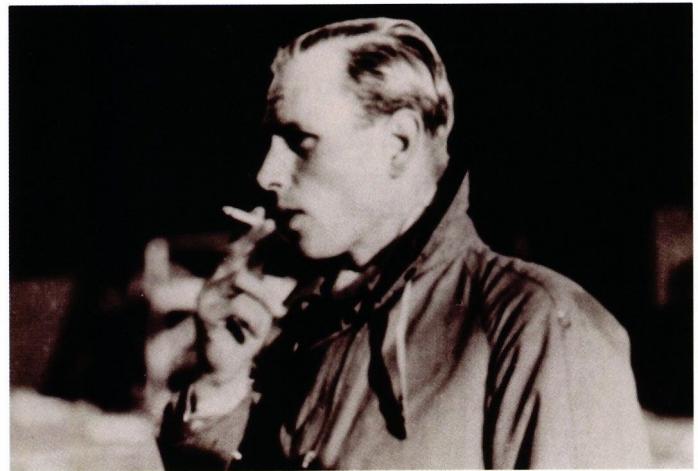
Erich Warsitz was born 100 years ago, on October 18, 1906, in Hattingen an der Ruhr, Germany. He learned to fly with the academic flight group in Hangerlar near Bonn, and in Rechlin, at the test center of what was then the Luftwaffe, he soon flew everything produced by the German aircraft industry, which was operating at full capacity. This marked the beginning of a career that would soon familiarize him with historic developments in aviation. In late 1936, Erich Warsitz was assigned by the Reich Aviation Ministry (RLM) to the later world-famous space researcher Wernher von Braun and Dr. Ernst Heinkel, one of the greatest aircraft designers of that time, because he was considered one of the most experienced test pilots and possessed exceptional technical knowledge. Working closely with Wernher von Braun, the first flight tests with a Heinkel He 112 began in 1937.
“We first installed a rocket engine in a Heinkel 112, and Erich took off with that thing for the first time at the Neuhardenberg airfield, a hundred kilometers east of Berlin. But that was only the beginning. That same rocket engine—and another one developed by the Walter company in Kiel—were later installed in a small aircraft, the Heinkel 176, which, unlike the 112, no longer had a propeller engine in the front but flew exclusively on rocket power. Even by today’s standards, this aircraft was an absolutely wild contraption—so wild, in fact, that even the famous pilot Ernst Udet, then a general in the German Air Force, promptly forbade Erich Warsitz from flying it again after witnessing a short test flight: “That’s not an airplane,” he said, “it’s ‘a thing that has no wings’—you can’t fly that.” It took some time before Erich finally persuaded him to allow further flights after all. This marks the beginning of spaceflight, which also played a very important role in the development of the fundamental elements, the technology, and the aeronautical aspects of modern space exploration.”
was ultimately rocket-powered. Even by today’s standards, this aircraft was an absolutely wild machine—so wild, in fact, that even the famous pilot Ernst Udet, then a general in the German Air Force, promptly forbade Erich Warsitz from flying it again after witnessing a short test flight he had performed: “That’s not an airplane—‘a thing like that with no wings’—you can’t fly that.” It took some time before Erich finally persuaded him to allow further flights. This marks the beginning of spaceflight, which also played a very important role in the development of the fundamental elements, the technology, and the aeronautical aspects of modern space exploration.”
| Length: | 7.48 m |
| Wingspan: | 7.2 m |
| Speed: | approx. 700 km/h |
| Thrust: | 450 kp, later 500 kp |
Once Erich Warsitz believed he had come to understand the peculiarities and pitfalls of the He 176 through the short test flights he had been conducting, he spontaneously scheduled the first real flight late in the evening of a beautiful early summer day. After he decided to fly immediately, an eerie silence fell over all the engineers and mechanics; no one spoke a word, for they all knew that the moment that would determine the future was just around the corner.
“At about 300 km/h, just before takeoff, the plane veered to the left. The left wing touched the ground—and I could already see the disaster coming. But I was determined to complete this flight come what may, so I kept the throttle open, and well off course, it suddenly took off in one go. It was an exhilarating feeling to fly almost silently around the northern tip of the island of Usedom at 800 km/h. I didn’t have time for any aerobatic maneuvers, because I already had to focus on the landing. I pulled the stick back, darted over the Peene in an instant, and touched down at 500 km/h. The runway end was reached, and after several regulation-compliant bounces, the aircraft came to a stop!” Despite the success with the rocket-powered aircraft, the He 176—which had been achieved in close collaboration with the Reich Aviation Ministry—Heinkel no longer received the necessary support he had hoped for. Although numerous influential figures at the Ministry of Aviation showed interest, World War II was just around the corner, and there were other concerns to address.
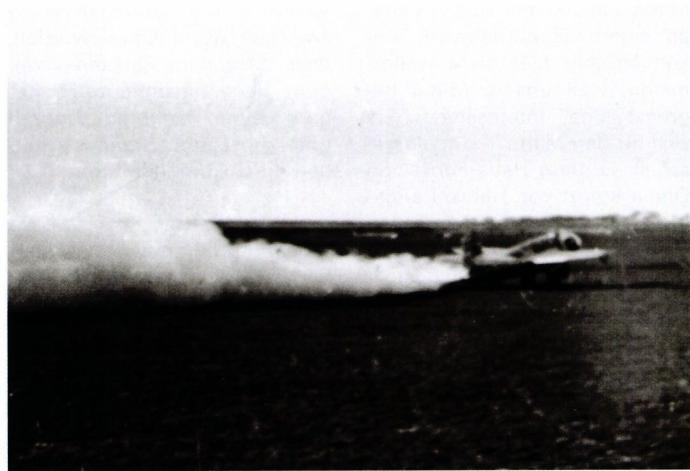
"I pressed the throttle, darted across the Peene in an instant, and skimmed the ground at 500 km/h. We had reached the runway end, and after several regulation jumps, the plane came to a stop!" Despite the success with the rocket-powered aircraft, the He 176—which had been achieved in close collaboration with the Reich Aviation Ministry—Heinkel no longer received the necessary support he had hoped for. Although numerous influential figures at the Ministry of Aviation showed interest, World War II was just around the corner, and there were other concerns.
Long before that, I had heard a completely different, eerie sound. Heinkel carried out the development without the RLM’s knowledge, and that small aircraft ushered in the jet age shortly thereafter.
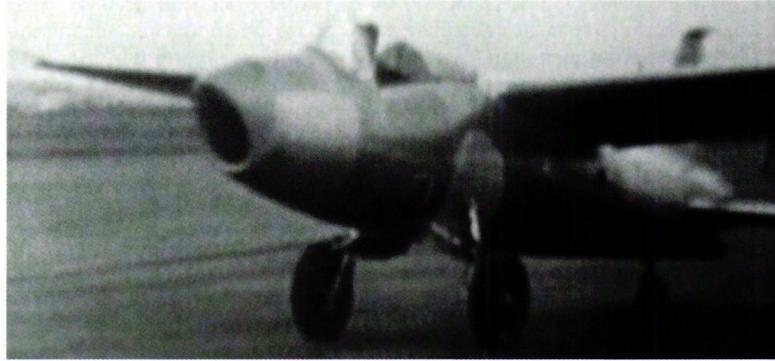
“I remember my first meeting with Erich Warsitz in Peenemünde very well; it was around the first days of summer in 1939. Heinkel had invited me to attend the second flight of the He 176. It was a remarkable experience for me to witness Warsitz’s daring, his outstanding skill, and his impressive flight demonstration. That evening, during a grand celebration, I had the opportunity to speak briefly with Warsitz about the upcoming flight test of the He 178.” On Sunday, August 27, 1939—just a few days before the outbreak of war—the time had come. The weather was beautiful, and the aircraft was towed to the launch site. Heinkel himself and his staff looked around with bated breath, for it had by then become clear that the future belonged not to the rocket-powered aircraft but to the jet aircraft, due to its longer flight time and greater operational reliability.
The story about his father, as told by his son Lutz Warsitz, has just been published as a book: Title: “Captain Erich Warsitz—The World’s First Jet Pilot.” Publication date: October 18, 2006. Available online and at bookstores. Publisher: Books on Demand GmbH, Norderstedt. ISBN-10: 3-8334-5378-8.
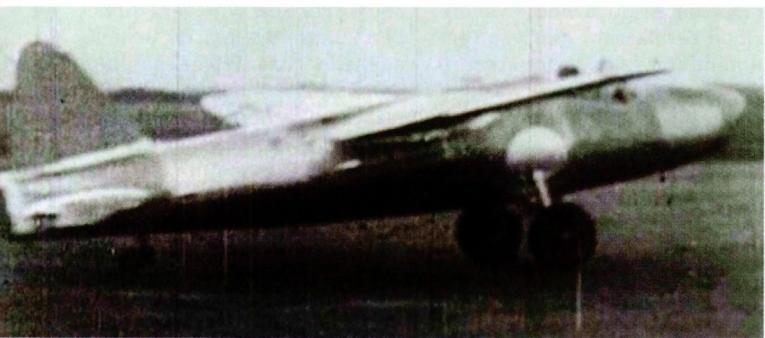
“I checked all the rudders once more for smooth operation, monitored the running turbine at various speeds, checked the pump pressures, temperatures, and much more, and gave the signal to the mechanics to close the cockpit. Slowly, I opened the throttle wide. As we began to roll, I was actually a bit disappointed by the thrust at first, because it didn’t shoot forward like the 176, but started moving slowly. But after a takeoff run of about three hundred meters, it naturally picked up speed very quickly. I was able to keep it on course wonderfully with the brakes, and then it took off. All the controls felt almost completely normal, while the turbine sang its high-pitched song steadily. It was wonderful to fly—not a breath of wind stirred, and the sun was very low on the horizon. After flying a long circuit, I was supposed to—as I’d been told in detail—land immediately. But then I got carried away. I flew a little faster and thought, “Oh, I’ll just do one more lap!” After the second lap, Erich Warsitz began his approach. The turbine responded perfectly to his throttle. Just above the ground, he brought the aircraft into the correct flight attitude, made a wonderful landing, and came to a stop just before the Warnow River, right by the water. The world’s first jet flight had been a complete success! The tension eased, and everyone rejoiced exuberantly. The mechanics hoisted Dr. Heinkel—who was now in high spirits—and Erich Warsitz onto their shoulders, and after a brief discussion, they celebrated the first successful flight—one that would set the course for the future—at the officers’ mess.
“Once again, Warsitz—through his extraordinary flying skills and courageous determination—had succeeded in making a completely new principle of flight take to the skies for the first time in the world.” After the war ended, Erich Warsitz was abducted by four Russian officers at 3:00 a.m. on the night of December 5–6, 1945, from his apartment located in the American sector. During the countless interrogations, the focus was on his earlier work in the field of rocket and jet aircraft development at the OKH (Army High Command) and the RLM, in Peenemünde, and at the Heinkel factories. After he refused to sign a contract committing him to five years of collaboration on Russian development projects in this specialized field, he was sentenced to twenty-five years of forced labor and subsequently sent to the notorious Penal Camp 7525/13 in Siberia. After his return in 1950, he initially worked as an independent entrepreneur until 1965, when he—as the saying goes—“retired to the mountains.”
In the early 1980s, I planned to write a paper for my high school graduation exam about my father and his extraordinary life. He was very proud of this and allowed me to interview him for over a year. One day he said to me, “Maybe one day you’ll write a book about me.” My book, *Captain Erich Warsitz—The World’s First Jet Pilot*, allows him—as a key eyewitness to this pioneering era, which remains unknown to the general public even today due to the strict secrecy surrounding the entire development—to describe it from his own experience and perspective —from the technical perspective as an engineer and from the aviation perspective as the first and only pilot to fly these revolutionary aircraft. In April 1983, my father suffered a severe stroke that would prove to be his death sentence. Captain Erich Warsitz died on July 12, 1983, in Barbengo, Switzerland, at the age of 76. In a letter dated April 14, 1988, Hans Pabst von Ohain wrote to my mother: “In later years, I have often found myself thinking back on Erich Warsitz. I still admire him today and am firmly convinced that, through his courageous self-sacrifice and his aeronautical and technical expertise, he contributed significantly to the rapid development of turbojet engines and rockets for manned aircraft. His portrait at the “National Air and Space Museum” in Washington, D.C.—showing him flying in the first Heinkel He 178—will forever bear witness to this.”
Lutz Warsitz
Image credits
: Lutz Warsitz, CH-6992 Cimo
; Karl-Ernst Heinkel, D-76530
Baden-Baden
; Paul Johnson, Image Library
Manager, The National
Archives, Kew, Surrey, UK.


News from HEBU

YOU KNOW WHAT I MEAN? 125 YEARS OF THE SWISS AERO CLUB
 Emil Giezendanner

F3A EUROPEAN CHAMPIONSHIPS IN ST-MACAIRE, FRANCE
 Matthias Bosshard

What's New at Leomotion.com

52. 2026 ALPS CUP
Emil Giezendanner
PRIDE AND GOOD IDEAS
 Markus Nussbaumer

EURO CONTEST GLIDER ACRO TOUR AUSTRIA 2026

TEAM MANAGER "THIS" BOSSHARD
 Rodito Nussbaumer

HORIZON HOBBY/LEMACO NEWS: MICRO OV-10 BRONCO 645 MM BY E-FLITE

BY YOUTH, FOR YOUTH
Lorena Betschen
CORSAIR F4U – A WARBIRD WITH A MEMORABLE LOOK
Jürgen Rosenberger, Jürgen Prinz
SMALL, MODEL-LIKE SAILBOATS
Res Dauwalder
TRY-OUT DAY AT MFV WETTINGEN
Urs Keller
34th HAHNENMOOS ALPINE MODEL AIRPLANE CAMP
Res Dauwalder
SUMMER FUN 2026 AT MG USTER
Martin Wunderli
WELCOME, NEW MEMBER!
Andrea Bolliger
FREE FLIGHT IN THE MIDDLE OF SUMMER
Urs Muntwyler
THE PC-21 STORY
Emil Giezendanner
TWIN TOWN PARTNERSHIP
Wolfgang Voeller
ATOM, THE NEW DOUBLE-DECKER FROM CPLR
Matthias Bosshard
COUPE DES ALPES – OBSERVE AND LEARN
Rodito Nussbaumer
INSIGHTS INTO THE HISTORY OF SEAPLANES

NEWS FROM HEBU
 Julia Bucher

FROM 0 TO 100
Markus Nussbaumer
MEMORIES
Wolfgang Völler
NOS REGION – A HUB FOR ELECTRIC AVIATION
Emil Giezendanner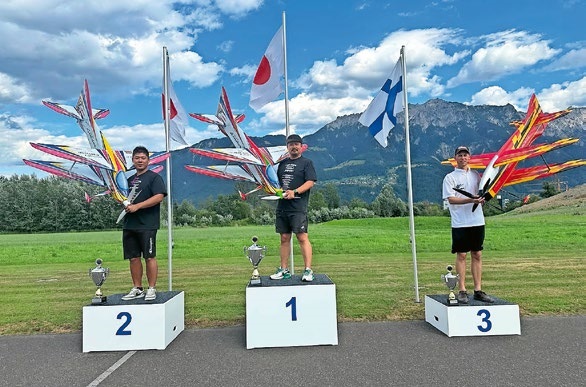
A SPECTACULAR F3A WORLD CUP IN THE PRINCIPALITY OF LIECHTENSTEIN
Emil Giezendanner
Have you almost forgotten about aircraft that take off and land vertically?
Emil Giezendanner