
Engine of Progress
Ever since the boom in external rotor motors, manufacturers of electric motor models have been a dime a dozen. Products from Eastern Europe—once considered unbeatable in terms of price—have long been copied in East Asia in a wide range of qualities and dumped onto the Western market at rock-bottom prices. Is it still worth it for a manufacturer in Germany—a traditional high-wage country—to compete in this market? What must it do to stand up to the countless products from the Far East? A company visit to Plettenberg in Baunatal, northern Hesse, was intended to shed light on this.
There’s an interesting story about how Plettenbergs got into engine building: To understand it, you need to know that model building has always played an important role in the Plettenberg family. Father (Gerhard) Plettenberg was an avid model boat racer and even competed in races. There, in the late 1970s, he met a certain Heinz Keller, the designer and namesake of the later-legendary Keller engines. Keller caused a sensation with his engines and even offered them for sale, though he had no ambition
to set similarly high standards for delivery and service as he did for the engines’ performance. The legend—whether true or at least well-invented—has it that Father Plettenberg, out of sheer desperation over the delivery delays, began building his own motors using the innovative magnetic material samarium-cobalt. Success—which does not always come with a smile—would reward his efforts just a few years later.
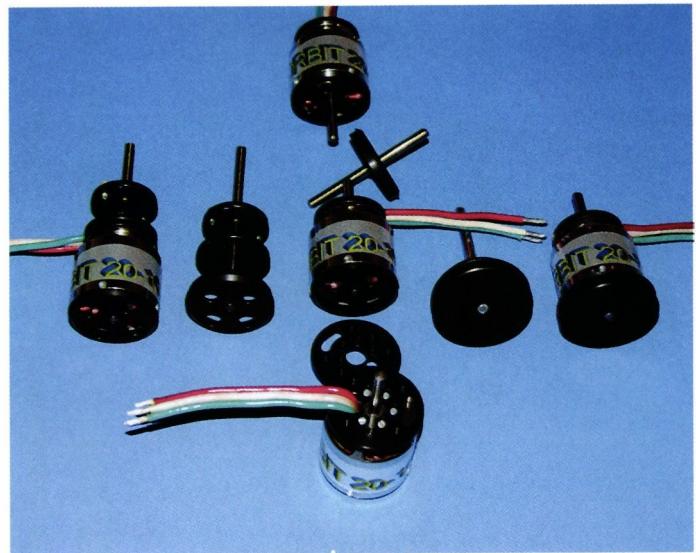
Since 1983, Plettenberg has been commercially engaged in the manufacture of high-performance DC electric motors, initially limited largely to the model-making sector. Since then, an increasing number of industrial customers have been added. This naturally requires a high degree of professionalism. At Plettenberg, the motors are therefore not only designed and calculated in-house, but also tested
and measured. A sophisticated test bench serves this latter purpose, on which every new design must first be put through its paces without mercy. “Man grows with his higher purposes,” said Friedrich Schiller. Motor test benches, unfortunately, do not do this—at least not without intervention. As a result, Uwe Plettenberg is constantly engaged in retrofitting. This starts with the power sources, where—due to the ever-increasing current demands—he has now switched back from electronic power supplies to (open) nickel-cadmium batteries.
The days when proven products could be manufactured for decades are irrevocably a thing of the past, even in the engine sector. Instead, demand-driven approaches and flexibility are what’s required. Thanks to the high degree of vertical integration (nearly all parts are manufactured in-house), the company can respond quickly and produce custom solutions. However, this does not mean that the company in Baunatal simply chases every passing trend. For companies with professional standards, innovations are naturally associated with significant investments and the premature depreciation of manufacturing equipment. For Plettenberg, this means planning with foresight and favoring products with growth potential that are equipped with market-ready unique selling points. It goes almost without saying that Plettenberg engines have been an indispensable part of competitive flying (F3B) for decades. →
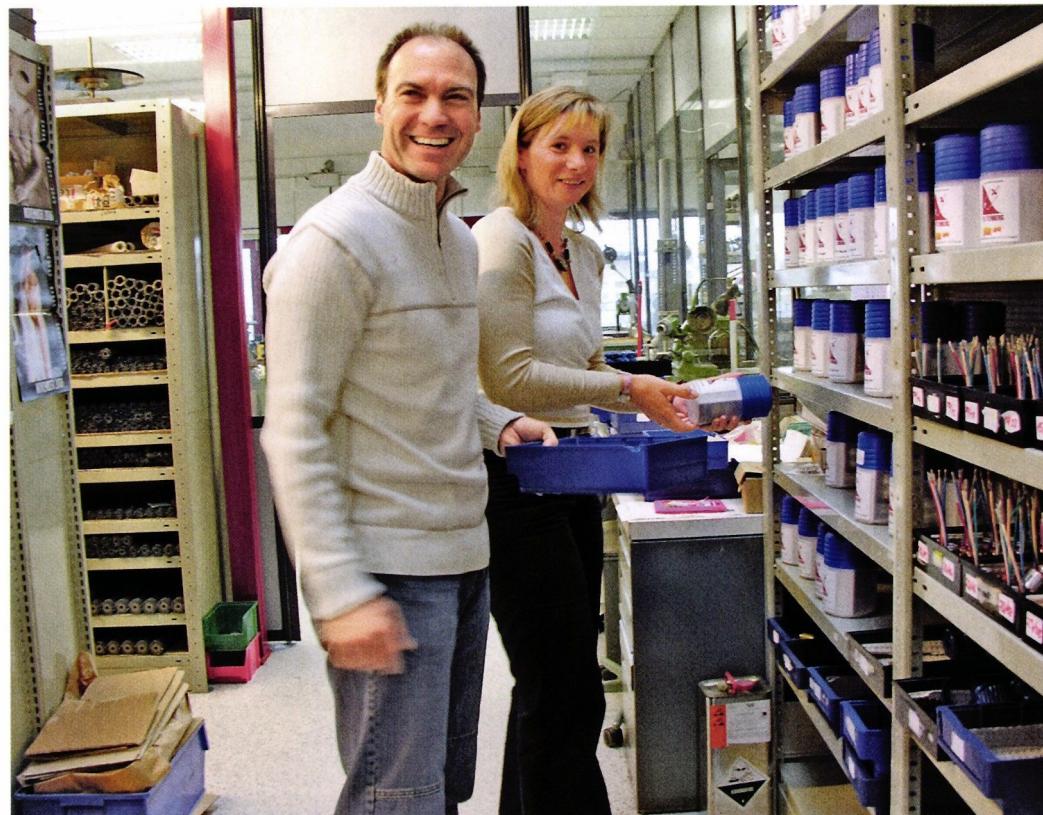
Uwe Plettenberg, operations manager and developer, employs eight full-time staff members and an additional 15 home-based workers. Ms. Diana handles management and accounting.
The major shift in the model motor market began to take shape around 1995. By then, Plettenberg had become the market-leading manufacturer in Germany—including under the “ULTRA” motor label distributed by Graupner. But progress never takes a break. “Silicon instead of carbon” suddenly became the motto
. It had become clear that, with the help of modern semiconductor electronics, motors could be built much more easily and, at the same time, with greater performance. And the Americans, who believed in progress, were already on the way to providing practical, verifiable proof of this with the 4-pole AVEOX, a descendant of NASA technology. On this side of the Atlantic, this engine was initially
diligently copied (there is hardly any better proof of the validity of an idea). Only two manufacturers soon went their own ways: Hans Lehner with his nutless, high-speed, two-pole motor—designed from the outset to operate without sensors—and Plettenberg with a 10-pole torque motor, which model aircraft enthusiasts soon began calling simply the “Washing Machine”
machine.” Initially, this motor was still equipped with optical sensors, which required a special type of controller, but it eventually learned to run without sensors on its own. This powerplant, built primarily for ambitious applications and used in various competition classes, was later joined by products designed for more recreational use (e.g., freestyle).
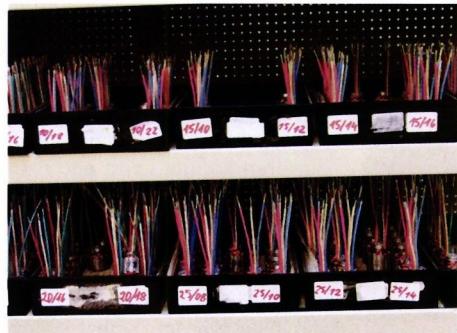
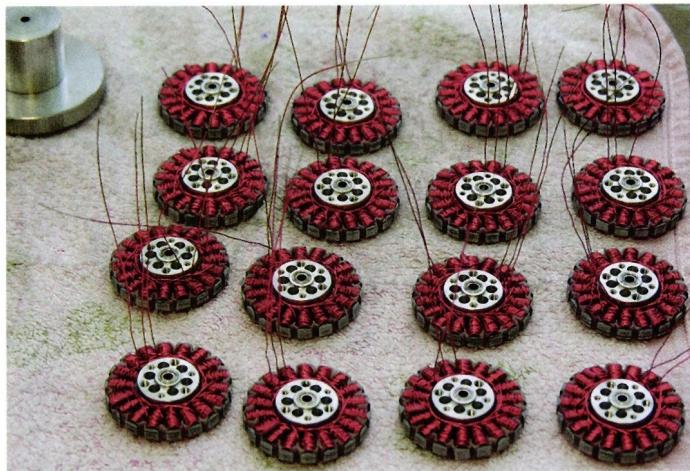
Pre-wound stators on standby. Don't worry: the rotor will be here soon!
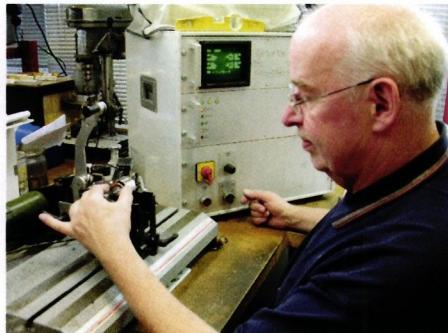
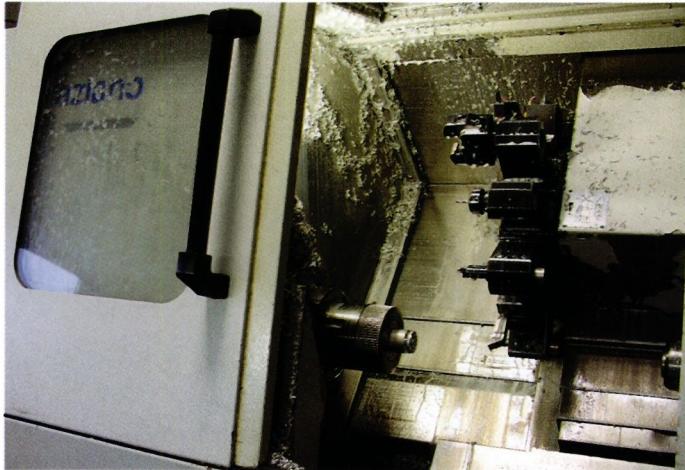
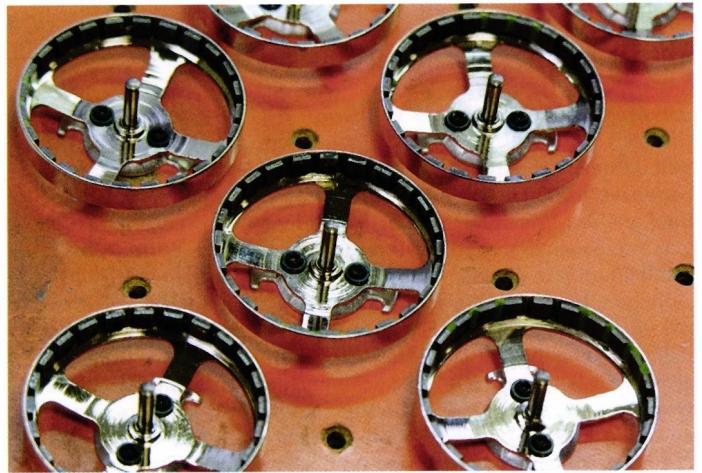
The rotors of the external-rotor motors are all balanced manually on this machine.
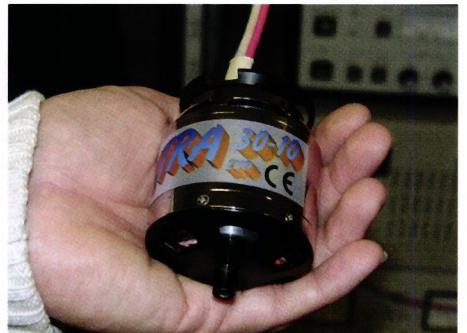
IRA 30-YO
CE
XTRA, a handful of outrunners with massive power.
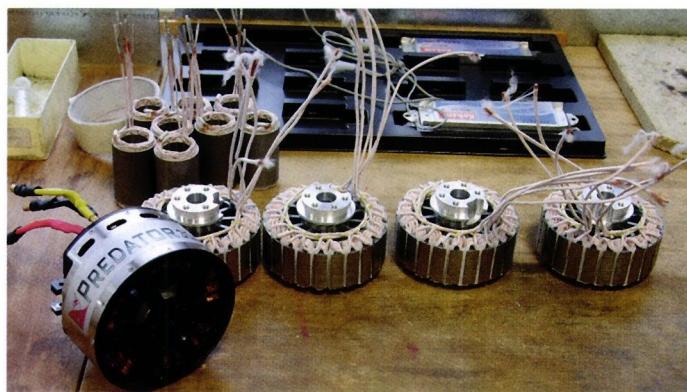
The Predator's 24-slot stators (front) are wound with copper strand. A specially designed iron core promotes cooling airflow. The "Mega-Pletti" is currently being shipped frequently to North America, England, and Switzerland.
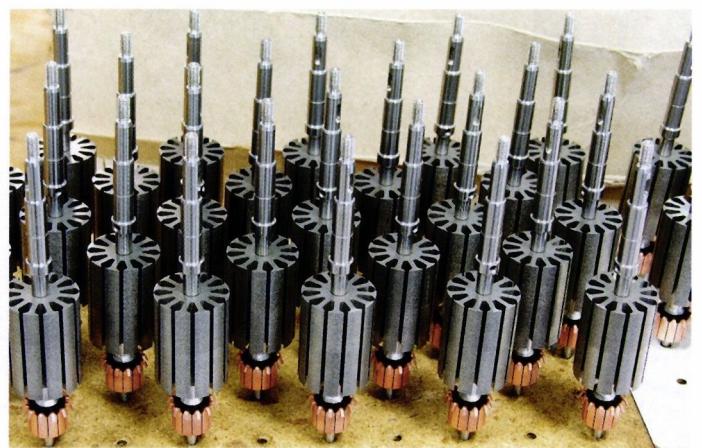
Conventional commutator motors are still being manufactured, primarily for industrial applications.
High-pole torque motors for commercial use. However, they are sometimes misused for model-making purposes.
But then the 21st century arrived, and with it the era of the outer runners. Plettenberg seemed to hesitate only briefly before adding the 10-pole “Orbit” into the lineup—a motor not optimized for extreme torque, but one that, thanks to its third support bearing, runs quite quietly even at medium speeds and quickly gained many fans, particularly among Hubi pilots. External-
XTRA-type outrunner motors rounded out the series, offering higher performance. With its XXL-class “Terminator” and “Predator” motors, Plettenberg demonstrates that it not only believes in the future of electric flight but is also determined not to leave it solely to the Chinese.
A run-in bench for brush motors. Well, it doesn't seem to be running at full capacity anymore, does it...?
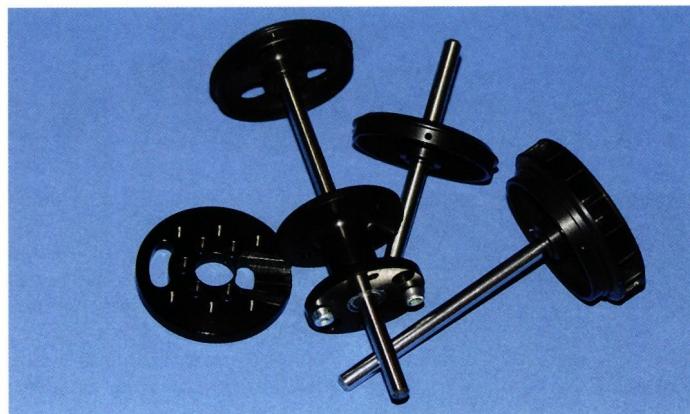
In Demand and Important: Engine Accessories.
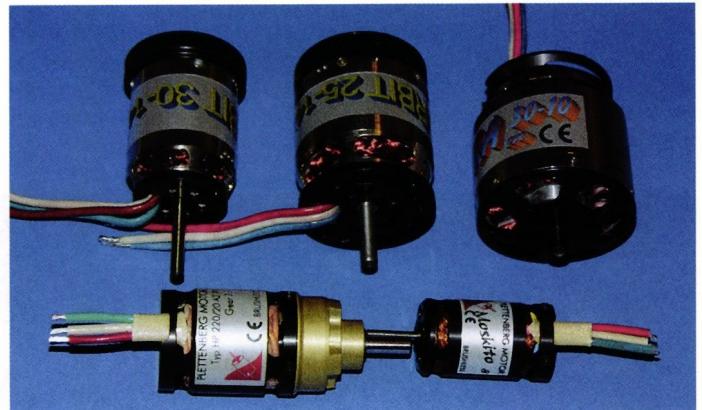
The Plettenberg Program is versatile.
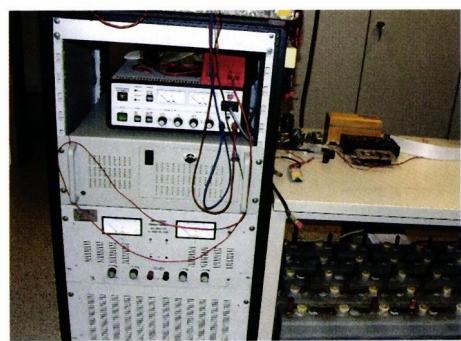
Power sources for the engine test stand. To meet the power requirements of the new generation of engines, stationary NiCd batteries are proving to be the last resort.
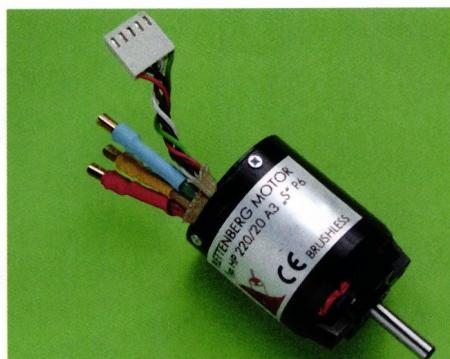
The first Plettenberg brushless motors—like the AVEOX—still had sensor connectors.
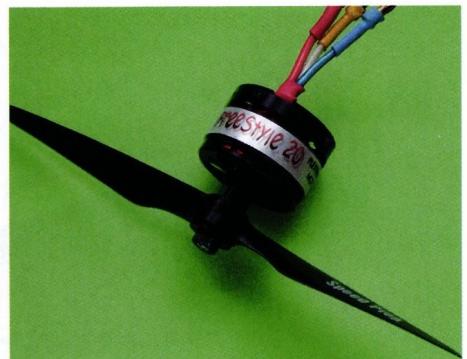
Even outside of competition, better performance with less weight is never a bad thing.


News from HEBU

YOU KNOW WHAT I MEAN? 125 YEARS OF THE SWISS AERO CLUB
 Emil Giezendanner

F3A EUROPEAN CHAMPIONSHIPS IN ST-MACAIRE, FRANCE
 Matthias Bosshard

What's New at Leomotion.com

52. 2026 ALPS CUP
Emil Giezendanner
PRIDE AND GOOD IDEAS
 Markus Nussbaumer

EURO CONTEST GLIDER ACRO TOUR AUSTRIA 2026

TEAM MANAGER "THIS" BOSSHARD
 Rodito Nussbaumer

HORIZON HOBBY/LEMACO NEWS: MICRO OV-10 BRONCO 645 MM BY E-FLITE

BY YOUTH, FOR YOUTH
Lorena Betschen
CORSAIR F4U – A WARBIRD WITH A MEMORABLE LOOK
Jürgen Rosenberger, Jürgen Prinz
SMALL, MODEL-LIKE SAILBOATS
Res Dauwalder
TRY-OUT DAY AT MFV WETTINGEN
Urs Keller
34th HAHNENMOOS ALPINE MODEL AIRPLANE CAMP
Res Dauwalder
SUMMER FUN 2026 AT MG USTER
Martin Wunderli
WELCOME, NEW MEMBER!
Andrea Bolliger
FREE FLIGHT IN THE MIDDLE OF SUMMER
Urs Muntwyler
THE PC-21 STORY
Emil Giezendanner
TWIN TOWN PARTNERSHIP
Wolfgang Voeller
ATOM, THE NEW DOUBLE-DECKER FROM CPLR
Matthias Bosshard
COUPE DES ALPES – OBSERVE AND LEARN
Rodito Nussbaumer
INSIGHTS INTO THE HISTORY OF SEAPLANES

NEWS FROM HEBU
 Julia Bucher

FROM 0 TO 100
Markus Nussbaumer
MEMORIES
Wolfgang Völler
NOS REGION – A HUB FOR ELECTRIC AVIATION
Emil Giezendanner
A SPECTACULAR F3A WORLD CUP IN THE PRINCIPALITY OF LIECHTENSTEIN
Emil Giezendanner
Have you almost forgotten about aircraft that take off and land vertically?
Emil Giezendanner