
A model aircraft club turned 80! A brief look back
In fact, a Zurich model aircraft club had already been founded in Zurich in 1915, and in 1918 an advertisement in the *Zürcher Tagblatt* announced the establishment of a “Club for Model Airplanes and Gliders.” In that same year, 1918, a model airplane competition was even held in Zurich-Enge, but these were all small, unorganized groups of model airplane enthusiasts.
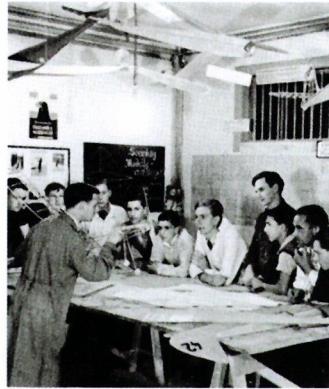
But then Messrs. Schramme, Burger, and Fellmann got together and founded the Model Aircraft Club (FMBV) on November 9, 1926. As early as its founding year, 20 members had joined, and a lively scene of model building and flying developed, even among high school students.
However, model flying lost its significance with the advent of manned gliding. It was only thanks to the dedication of a few “die-hard enthusiasts” that the development work continued, and attempts were made to introduce model building into the school curriculum—but these efforts failed due to resistance from the home economics teachers!
Since some model aviators had switched to gliding and only a small group of model aviators remained, the club joined forces with the Zurich Gliding Group and secured a small space in the Letten glider-building facility. Werner Schramme taught the first model-building courses during this time.
The exhibition “Der Flug” (May 28 to July 18, 1933), organized by the Zurich section of the AeCS, went down in history as a milestone in the development of model aviation.
In 1935, member Walter Baur built a WB155 glider model out of pine spars and plywood ribs, which weighed just 750 grams with a wingspan of 175 cm. The flight took off from Bachtel-Hochwacht and ended after gaining 300 meters in altitude and covering a distance of 5.22 km.
In 1936, Dr. W. Dollfuss took over as head of the Zurich Model Building Group, and with him began a remarkable upswing (see also quotes in “Tilgenkamp”). The group moved into a new workshop, separated from the Zurich Gliding Club, and became independent. That year also saw the group’s biggest event: a radio-controlled model-building course led by Arnold Degen. This course lasted five sessions, during which A. Degen introduced listeners to the secrets of model building via the microphone of Radio Studio Zurich. The course’s great success was underscored by the sale of 1,700 model kits!
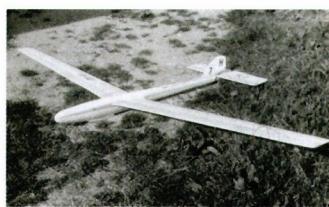
In 1937, A. Degen published the construction plans for the “Shell 1” and distributed them free of charge in a print run of over 10,000 copies. This time, the Beromünster regional radio station broadcast the second radio model-building course.
In 1940, the AeCS established a set of framework regulations that allowed for the affiliation of the model aircraft group.
In 1943, the City of Zurich showed active interest in model aviation and approved CHF 3,000 for a pilot program for an optional summer course titled “Model Building in School.” Over 500 students registered, and 250 of them completed the course. Based on this result, the city supported further courses of this kind.
On June 14, 1944, member Traugott Haslach set a new Swiss record (endurance record for gliders/high launch) with a flight time of 2 hours, 21 minutes, and 3 seconds! He achieved this with the “Riesenvogel G41,” built according to plans by Emil Glünkin. This achievement was also submitted to the FAI as a world record.
A decline in model aviation then became apparent, and various groups were disbanded due to a lack of new members.
As early as 1945, balsa wood was introduced to Switzerland by Willi Streil. It was a sensation, to be sure, but still very expensive.
Efforts were made to keep the club going until 1949, but then the workshop had to be vacated due to lack of use; more and more members preferred to work at home.
In 1950, after nearly 15 years, Dr. W. Dollfuss stepped down as the section’s model aviation director.
Gradually, however, the group came back to life, and the initially low turnout at the new workshop eventually turned into overcrowding at times.
There was also significant activity in terms of competitions—and especially in the results achieved—which manifested itself in several podium finishes. This was particularly true during the years 1952–1956.
In 1958, the public approved the expansion of Kloten Airport, which had a significant negative impact on the “Langer Zinggen” model airfield.
Starting in 1960, tensions within the group began to rise. This was due to differences of opinion, which led to several members leaving the group. Naturally, this also had an impact on the group’s competitive success. Major victories were few and far between.
It wasn’t until 1962 that the group celebrated success again with its new model, the A2; however, the group’s difficulties continued to grow due to the loss of the “Langer Zinggen” model airfield. Complaints from the local population about noise pollution from the model combustion engines also began to mount.
With the advent of model kits, the number of homemade models dwindled, and as a result, use of the workshop declined. “Selfishness” took hold, and the once-strong camaraderie visibly diminished. It wasn’t until 1965 that calm returned to the group, and with it came a resurgence in competition success, as evidenced by several first-place finishes by individual members as well as by the group itself.
Starting in 1967, with the advent of radio-controlled models, the free-flight category faced a crisis. The construction of an 8×60-meter hard-surface runway near Niederhasli by the newly founded IG ZÜBÜ (Zurich and Bülach groups), which was intended exclusively for radio-controlled model aircraft, addressed this new trend. This was also reflected in top rankings at competitions.
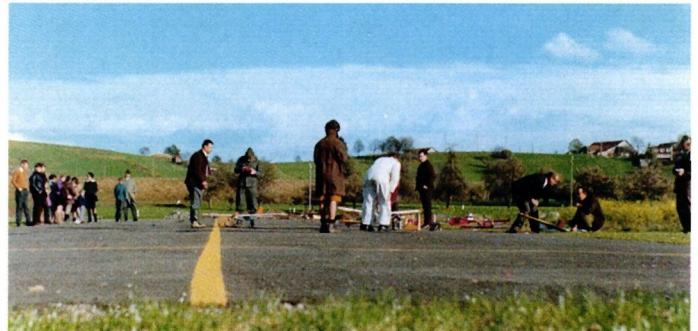
The group was only too happy to accept the support it has received throughout Switzerland. With over 7,000 members, the model aircraft division has become the largest division within the AeCS.
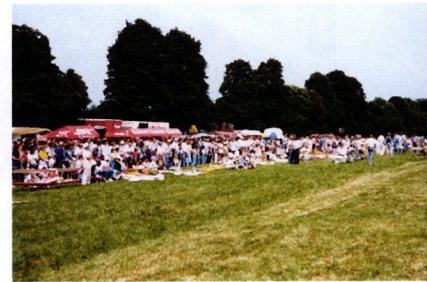
Unfortunately, the well-attended runway generated “too much noise harmful to health” on weekends, as one resident put it. As a result, that runway’s days were numbered, and in 1968 the town council barely approved the holding of two competitions. Among other events, an anniversary flying event was held on June 29 to celebrate the 20th anniversary of the company Streil & Co., during which the companies Graupner and Schuco Heli sent team representatives and demonstrated new products.
Until 1972, there was no significant activity to report, as no new model flying field could be found despite an intensive search. It was not until April 1972 that the board was able to announce the good news that a new site had been found near Eglisau. The IG ZÜBÜ was dissolved, as the Bülach group had also found a new site.
A record-breaking flight was carried out with the “Spirit of St. Louis” model, traveling from Zurich to Lachen. Pilot Heini Steiner was aboard a motorboat on Lake Zurich, and the model was skillfully landed safely at the Lachen airport after 80 minutes and a distance of just over 30 km.
Until 1977, no significant changes occurred, except that the entire model aviation scene shifted toward ready-to-fly kits—meaning models were no longer built from blueprints but assembled according to instructions. Furthermore, the development of electronics
turned it into a hobby for everyone. As a result, the Buchegg workshop had to be closed permanently.
In 1977, rigorous measures were implemented with the new bylaws and implementing regulations, and the group became a legal entity as an independent association. This reorganization also resulted in a decline in membership, which fell from 115 to 81 members. In model flying, as in other sports, competitive flying increasingly evolved into a high-performance sport, which required ever-greater investments of money and time. For this reason, friendly flying events and internal group competitions became more popular again.
1980: an eventful year for the MGZ, as the question of whether to withdraw from the AeCS was on the table. At an extraordinary general meeting, it was decided to remain with the Zurich section of the AeCS and to join Model Flying Region 5 as a guest member in order to continue participating in official competitions.
Since it was becoming increasingly difficult to find suitable and willing candidates for the club’s board, the board was reduced from 7 to 5 members in 1981. That same year, the Seebach Air Show ’81 marked the beginning of the club’s public outreach efforts, which were extensively featured in the October 1981 issue of *Aero-Revue*.
In 1986, the MGZ was granted permission by the City of Zurich for the first time to hold a model aircraft event on the Allmend. This event was held for a second time in 1988 with tremendous success. Among many other pilots, World Champion Hanno Prettner was the big star of the event. To the
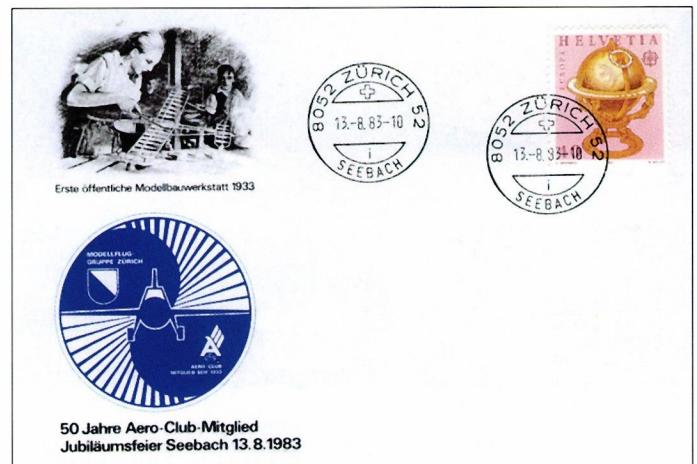
In 1983, the group celebrated its 50th anniversary as an AeCS member. The recognition that MG Zurich, as a pioneering group, had last held a model aircraft event on the
The event was held on the rear Allmend for the last time in 1990 due to the start of construction on the Üetliberg Tunnel. →
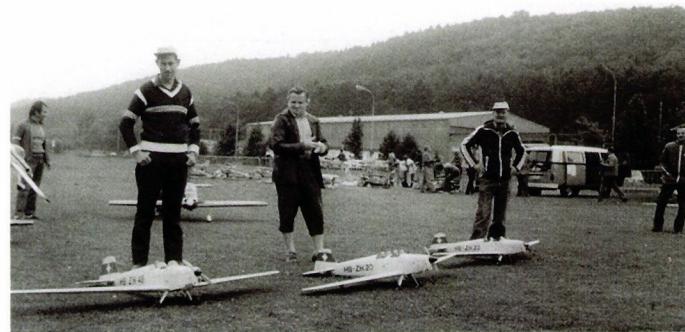
In 1992, the MGZ hosted the first-ever Schlütter Cup in Switzerland at the Vordere Allmend. This event was also
a great success, and model helicopter flying was effectively showcased to a wide audience.
In 1993, the “60 Years of MGZ with the AeCS” anniversary was celebrated with an air show at the club’s own airfield in Eglisau/Buchberg.
Starting in 1997, the “Flying Circus Eglisau” air show was launched, which takes place every two years at the Eglisau model airfield. The event also offers sightseeing flights in a full-size helicopter, which are always well-received. The fact that these helicopter pilots are also able to put on a sensational flight program even in very confined spaces is a welcome bonus.
Model airplane towing has also become increasingly popular, and in 2000,
the founding of the Power-Tow Team was announced.
Competition participation has dwindled in recent years to just a few events, though impressive results are still being achieved time and again. As in previous years, the MGZ remains at the forefront of the latest trends, namely glider aerobatics and GPS flying.
In the hope that this motivated, vibrant, and active group will continue to play an active role in shaping our wonderful hobby, I conclude this brief retrospective on 80 years of MG Zurich.
Walti Wuhrmann


News from HEBU

YOU KNOW WHAT I MEAN? 125 YEARS OF THE SWISS AERO CLUB
 Emil Giezendanner

F3A EUROPEAN CHAMPIONSHIPS IN ST-MACAIRE, FRANCE
 Matthias Bosshard

What's New at Leomotion.com

52. 2026 ALPS CUP
Emil Giezendanner
PRIDE AND GOOD IDEAS
 Markus Nussbaumer

EURO CONTEST GLIDER ACRO TOUR AUSTRIA 2026

TEAM MANAGER "THIS" BOSSHARD
 Rodito Nussbaumer

HORIZON HOBBY/LEMACO NEWS: MICRO OV-10 BRONCO 645 MM BY E-FLITE

BY YOUTH, FOR YOUTH
Lorena Betschen
CORSAIR F4U – A WARBIRD WITH A MEMORABLE LOOK
Jürgen Rosenberger, Jürgen Prinz
SMALL, MODEL-LIKE SAILBOATS
Res Dauwalder
TRY-OUT DAY AT MFV WETTINGEN
Urs Keller
34th HAHNENMOOS ALPINE MODEL AIRPLANE CAMP
Res Dauwalder
SUMMER FUN 2026 AT MG USTER
Martin Wunderli
WELCOME, NEW MEMBER!
Andrea Bolliger
FREE FLIGHT IN THE MIDDLE OF SUMMER
Urs Muntwyler
THE PC-21 STORY
Emil Giezendanner
TWIN TOWN PARTNERSHIP
Wolfgang Voeller
ATOM, THE NEW DOUBLE-DECKER FROM CPLR
Matthias Bosshard
COUPE DES ALPES – OBSERVE AND LEARN
Rodito Nussbaumer
INSIGHTS INTO THE HISTORY OF SEAPLANES

NEWS FROM HEBU
 Julia Bucher

FROM 0 TO 100
Markus Nussbaumer
MEMORIES
Wolfgang Völler
NOS REGION – A HUB FOR ELECTRIC AVIATION
Emil Giezendanner
A SPECTACULAR F3A WORLD CUP IN THE PRINCIPALITY OF LIECHTENSTEIN
Emil Giezendanner
Have you almost forgotten about aircraft that take off and land vertically?
Emil Giezendanner