
The Gam School in Sion, Valais
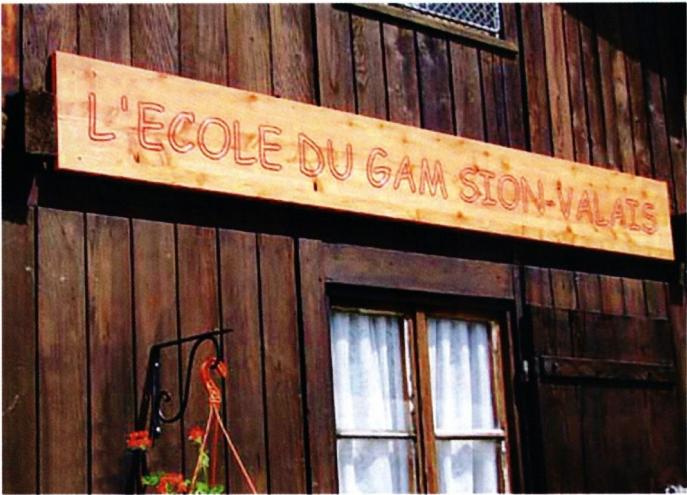
In my canton, as in all the others, there are schools for music, soccer, skiing, and certainly model-making. I was personally fortunate enough to learn the basics of this sport in 1969 at a small school located at the foot of the Lycée-Collège de la Planta in Sion.
The high school I attended at the time for a very different program. Bernard Rey and Christian Zufferey, our instructors, did their best to give us the best advice on both building and flying our models, which were called Scoiattolo or Nobler back then. It was actually circular flight. As the years went by and my interest grew, I had the chance to participate in several national and international competitions, which allowed me to compete four times in the world championships for this discipline. And there I learned a great deal more, including patience and perseverance. Drawing
from these experiences, I went on to organize numerous events across several disciplines over the course of about thirty years. For me, 2003 and 2004 with Indoormania represented the pinnacle of my organizational work, thanks to the participation and assistance of 70 volunteers from various clubs. However, weary of the various problems associated with this type of activity and the broken promises of so-called adults, the time has come for me to try to pass on the basics of this surprising and exciting hobby to young and future modelers.
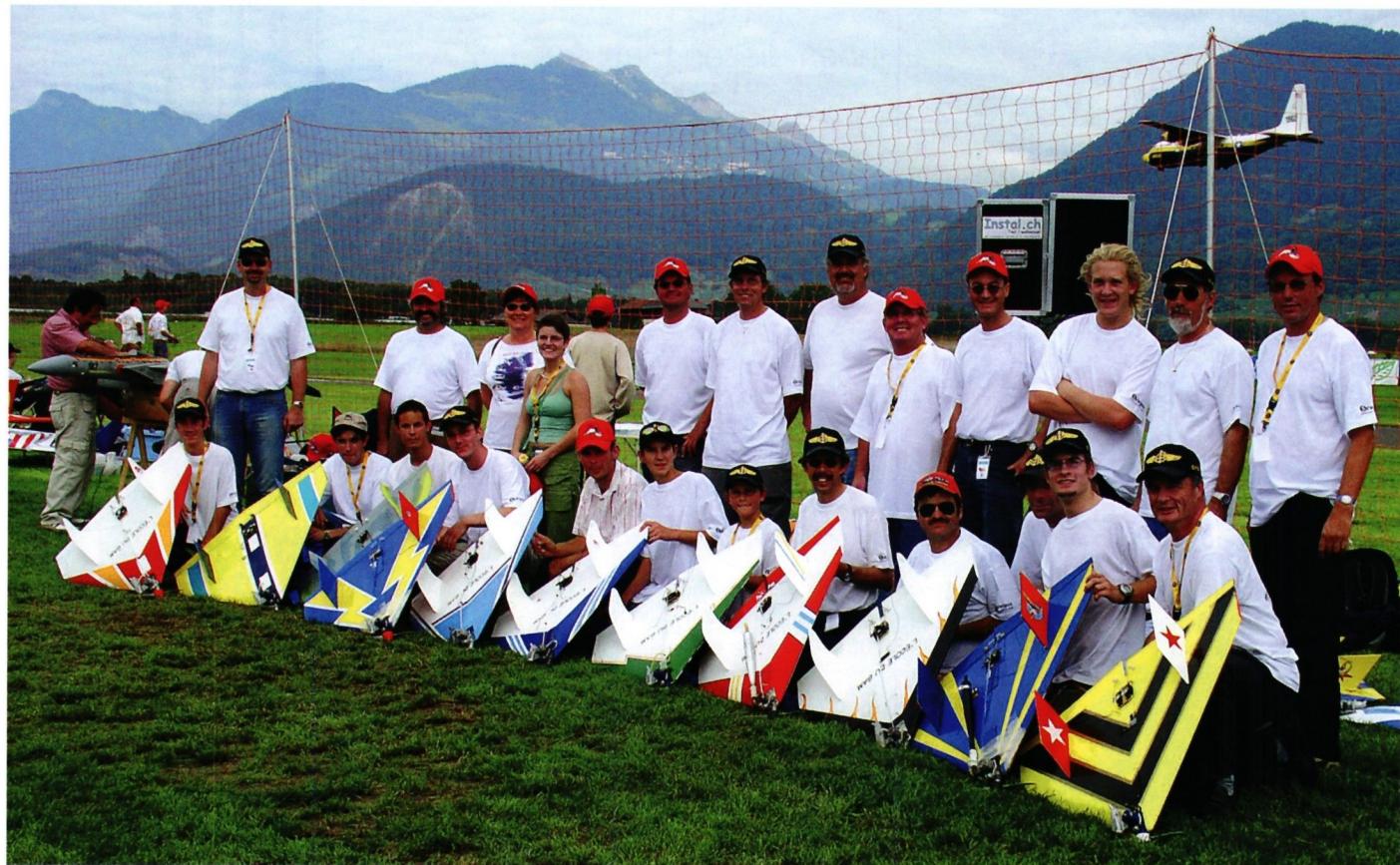
In May 2006, I suggested to my president, Jean-Gérard Constantin, that we start a small school and set up a workshop in our new building located east of our airfield. The project was carried out smoothly, and classes began that summer. The first project took shape in the form of a flying wing.
called Waza. It’s actually a reimagining of an idea my son Nicolas had a few years ago. Six gliders were prepared for the Gam Bex-Aigle airshow in September 2006. Flying alongside four other models dusted off from the attic, the group completed two flights that famous Sunday—without a single crash or collision!
Wanting to keep the momentum going, I designed and built the Minifuntana as my second project. With a wingspan of 1,050 mm and a weight of 700 g, I planned to build it using 4×4 mm balsa strips to reduce the final cost and simplify the construction process. Thanks to the publicity generated by the “Passeport Vacances” program and the results of various 2006 air shows, seven students aged 11 to 15 enrolled in the school to take the model-building classes.
So, since October 2006, we’ve met 25 times, on Wednesdays from 6:00 p.m. to 8:00 p.m. However, I must admit that my initial enthusiasm has waned somewhat in the face of the scale of the task. The class doesn’t always run as smoothly as it should, given the children’s fatigue and their various other Wednesday afternoon activities. On the other hand, for young people who have never built a model before, I can’t help but admire their conviction and determination.
It’s May 2007, and I have to face the fact
that it is difficult to get young people interested in a long and tedious building project, especially given the options now available: top-quality models made of wood and covered with fabric, all for a relatively modest price. In fact, the cost of the materials for the school’s Minifuntana is practically the same as that of the corresponding finished model found in all specialty stores.
Once this second project is complete, I will shift the focus of my course to offer assistance with assembling purchased models, as well as basic training on their general use. I’m putting the finishing touches on a short theoretical course consisting of about twenty chapters and covering various aspects of our hobby.
For me, the experience has been very rewarding because the students are eager for information and advice. It’s best not to make mistakes because they learn quickly. I never imagined that supervising seven kids for two hours would require so much concentration and organization. I got caught up in my own game—and that’s a good thing.
To wrap things up, I’ll leave you with a few of their comments:
Julien: Hi, it’s me, Julien. I’m building a plane called the Minifuntana with Yves. Thanks to him, I’m learning how to build—
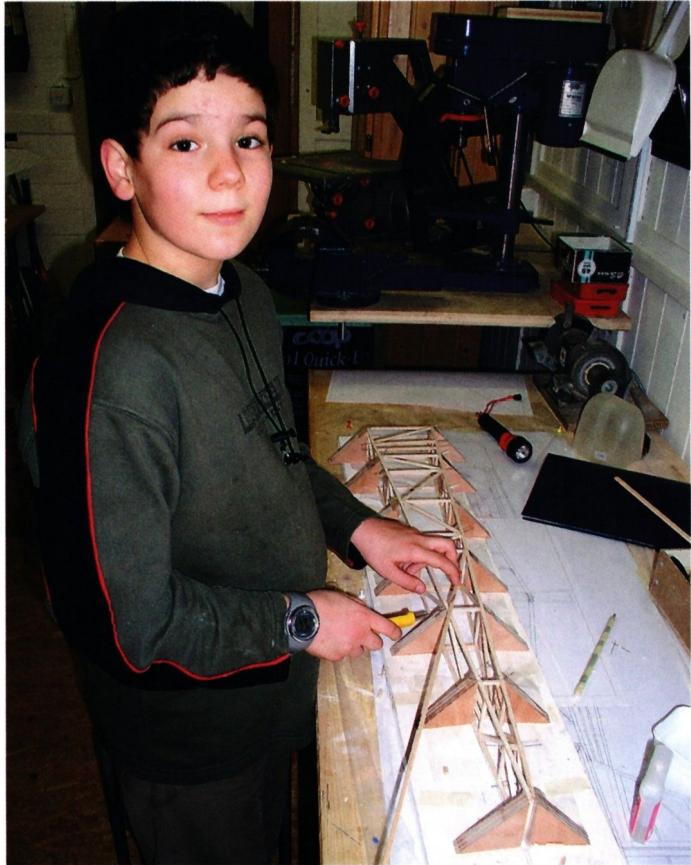
Building airplanes. The main material is balsa wood. I really enjoy doing it.
Flavien: It’s great to build an airplane, especially with Yves, who’s really nice—though sometimes he gets mad. I hope the Minifuntana turns out great. Anyway, it’s up to us to do a good job.
Dylan: Hi, my name is Dylan and I’m 12 years old. For several months now, I’ve been working on
building a Minifuntana thanks to Yves and the Gam Sion school. There, we’re learning how to work with balsa wood and fiberglass and how to use different types of glue.
Chris: Model aircraft building: I like going there because we learn how to build model airplanes and sometimes how to fly them. I also like going there because I make friends and get to know—
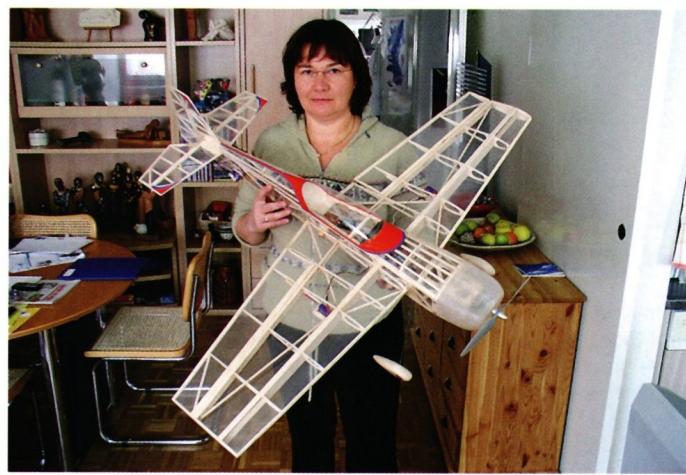
I'm learning the names of certain parts. I also get to meet people from the group. The teacher is nice, even if he scolds those who act up a little.
Cyprien: Building a Minifuntana is really great. We learn how to read blueprints, recognize different kinds of glue, and use various tools, techniques, and materials. We also learn to be precise in our work.
Best regards again from Joel and Diego.
For Gam Sion-Valais, contact Yves Sedlatchek at 079 352 61 50.
The Minifuntana blueprint is available in digital format. It was drawn in AutoCAD in DWG format.


News from HEBU

YOU KNOW WHAT I MEAN? 125 YEARS OF THE SWISS AERO CLUB
 Emil Giezendanner

F3A EUROPEAN CHAMPIONSHIPS IN ST-MACAIRE, FRANCE
 Matthias Bosshard

What's New at Leomotion.com

52. 2026 ALPS CUP
Emil Giezendanner
PRIDE AND GOOD IDEAS
 Markus Nussbaumer

EURO CONTEST GLIDER ACRO TOUR AUSTRIA 2026

TEAM MANAGER "THIS" BOSSHARD
 Rodito Nussbaumer

HORIZON HOBBY/LEMACO NEWS: MICRO OV-10 BRONCO 645 MM BY E-FLITE

BY YOUTH, FOR YOUTH
Lorena Betschen
CORSAIR F4U – A WARBIRD WITH A MEMORABLE LOOK
Jürgen Rosenberger, Jürgen Prinz
SMALL, MODEL-LIKE SAILBOATS
Res Dauwalder
TRY-OUT DAY AT MFV WETTINGEN
Urs Keller
34th HAHNENMOOS ALPINE MODEL AIRPLANE CAMP
Res Dauwalder
SUMMER FUN 2026 AT MG USTER
Martin Wunderli
WELCOME, NEW MEMBER!
Andrea Bolliger
FREE FLIGHT IN THE MIDDLE OF SUMMER
Urs Muntwyler
THE PC-21 STORY
Emil Giezendanner
TWIN TOWN PARTNERSHIP
Wolfgang Voeller
ATOM, THE NEW DOUBLE-DECKER FROM CPLR
Matthias Bosshard
COUPE DES ALPES – OBSERVE AND LEARN
Rodito Nussbaumer
INSIGHTS INTO THE HISTORY OF SEAPLANES

NEWS FROM HEBU
 Julia Bucher

FROM 0 TO 100
Markus Nussbaumer
MEMORIES
Wolfgang Völler
NOS REGION – A HUB FOR ELECTRIC AVIATION
Emil Giezendanner
A SPECTACULAR F3A WORLD CUP IN THE PRINCIPALITY OF LIECHTENSTEIN
Emil Giezendanner
Have you almost forgotten about aircraft that take off and land vertically?
Emil Giezendanner